

Defining 'sensory'
More and more, we're seeing 'sensory' toys stocked on the shelves. And, whilst this increase in awareness is a positive development, there's often confusion around what is meant by the word 'sensory'. This article is here to help explain and offer practical solutions to anyone whose sensory profile stops them (or someone in their care) from doing the things they want and need to do.

It's often the case that the brain and body are thought of as separate entities that work together. In reality, they are very much connected. This idea is reinforced through terminologies such as 'mental health'. However, a problem with the mind is also a problem with the body (and vice versa).
Our brains span the entire length of our bodies through a network of nerves. Some nerves carry messages to the brain from our environment; these are our senses. Our brains then process this information, which is sent back through other nerves to generate a movement.
'Sensory' or 'sensing' is the first step for the central nervous system. When these senses don't work as they should, a person receives too many or too few messages. The brain may have too little or too much information to decide on a motor output. This can result in the brain activating its 'survival mode'. The outcomes of which are:
Here we can see that warnings from the body (senses) trigger survival responses in the brain. In reality, this may look like a child who seems to act aggressively without reason. Or, maybe a child who rips up their work when they make a mistake. Or a child who refuses to go to school or social gatherings. People who are often prevented from meaningfully engaging because of sensory processing difficulties are characterised as having SPD.
How to help...
The question remains: how can we help those with sensory processing difficulties? Two complementary approaches will be explored below:
Adaptations: We now know that sensory signals are received through our ears, eyes, skin receptors, etc., from the environment. So, adapting an environment to suit specific sensory needs may help to balance the amount of information the brain is presented with and asked to process. For example, a child who is receiving too many visual signals may benefit from dimmed lighting in their classroom. Or, maybe they can't filter the auditory information, which can be reduced with noise-cancelling headphones. Do all of the chairs in their classroom squeak? Replacing the rubber on the chair legs could significantly reduce classroom noise!
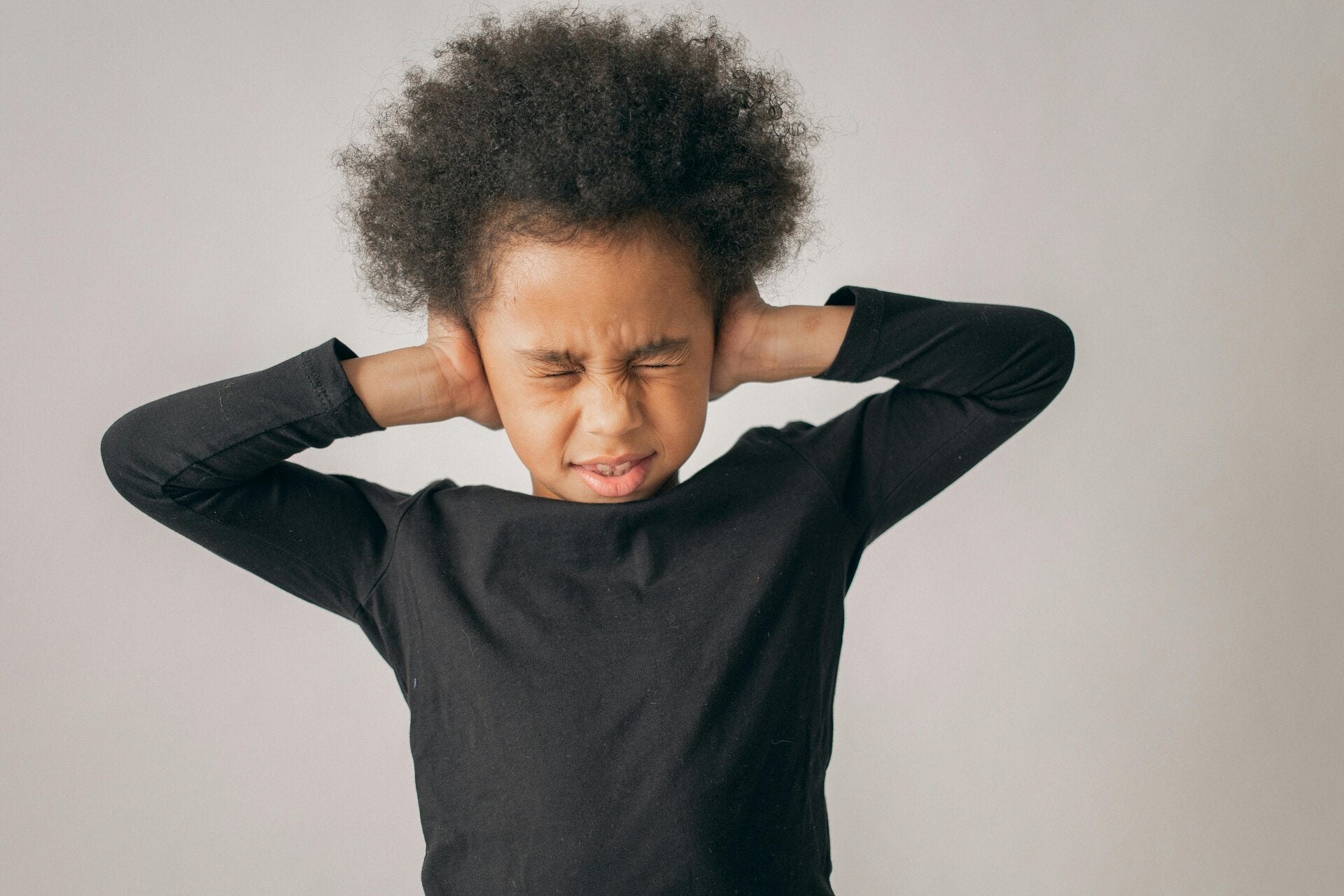
Whilst adaptations provide a quick, simple solution, they fail to prepare children for 'real-world' situations. That's why adaptations should be used alongside a graded exposure. In this instance, graded exposure refers to the process of exposing a child to essential environments that can be overwhelming. The key is to expose them in small doses, adding a little time each visit. It's important to remember that, like us, children have good and bad days. Progress isn't linear, and children need to be approached with love and nurture, even on their bad days.
Imagine this scenario...
Your child has a meltdown every time you take them to the shop, making your life difficult. Rather than take the child, you go during your lunch hour at work, and now you have no downtime anymore. Alternatively, you accept the risk of causing yourself and your child distress by taking them with you.
Dual approach: Plan to take your child with you to a smaller shop once a week. Offer them a useful adaptation, e.g., sunglasses or noise-cancelling headphones. Once you've had a few good trips and seem better adjusted, you can slowly reduce the time they have these items. Here, you've applied both adaptations and graded exposure. Your child is now preparing for the real world and is learning to self-regulate!
The secret senses...sshhh!
Did you know, we actually have 8 senses?? Here are the three they don't teach at school...
Are you experiencing some of the challenges discussed in this blog? If yes, your child or student could benefit from completing a sensory profile assessment. Click the button to redirect to our assessment information.
Thank you for reading. I hope you've found this article useful and feel better prepared to apply your knowledge. We'd love to hear from you, and encourage you to leave a comment below.
Add comment
Comments
Very informative. I never knew about the additional senses. I feel educated!